Why use an Orthodontic Plate?
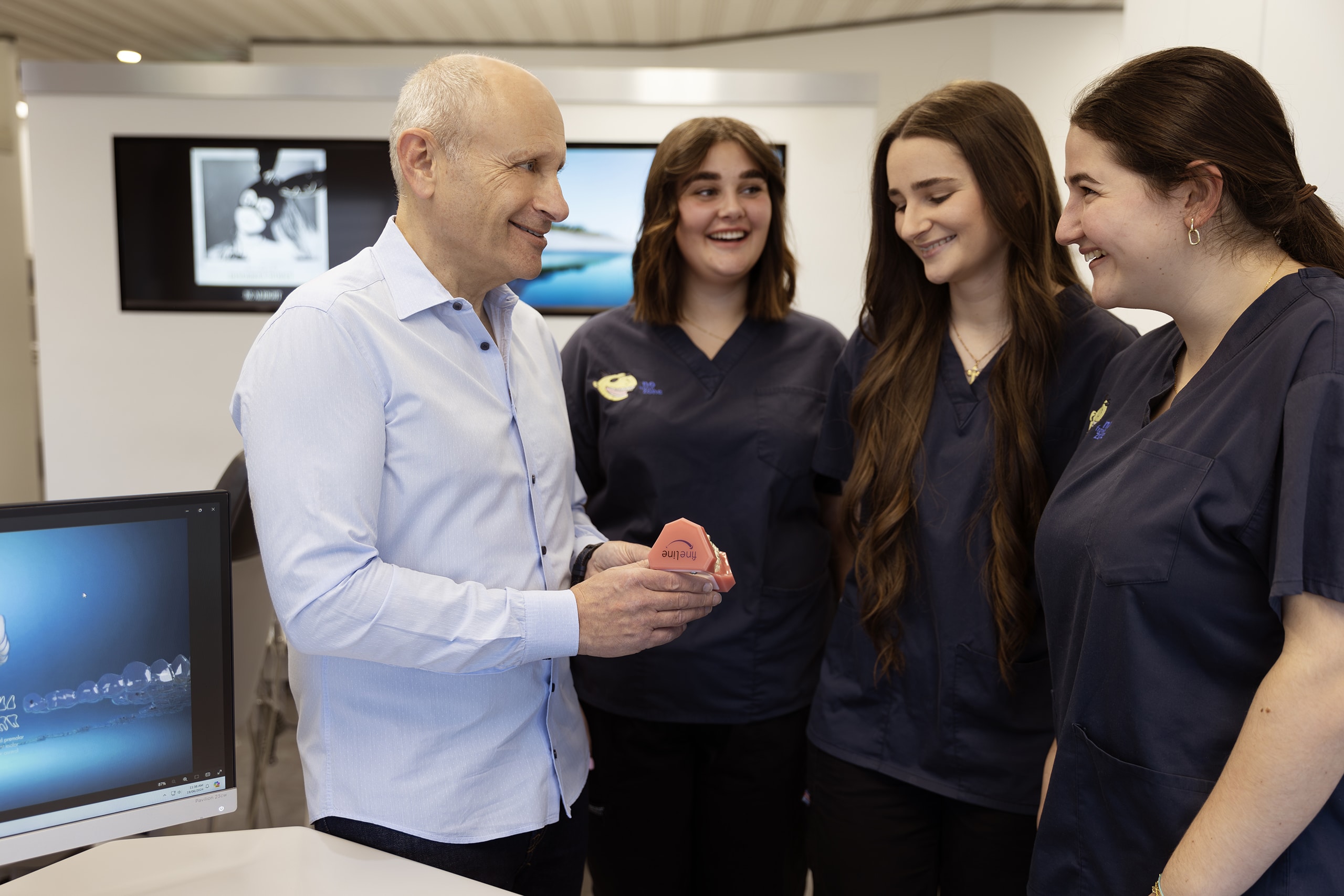
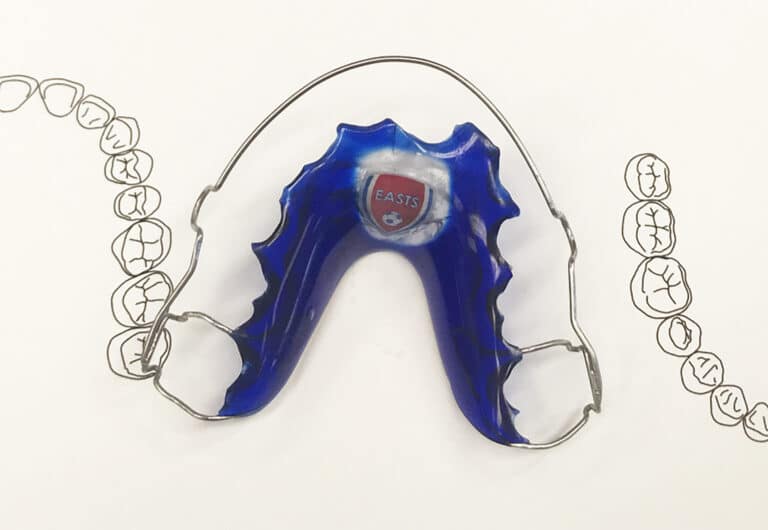
An orthodontic plate is a common orthodontic appliance, generally made from plastic and metal. Usually a plate has moulded plastic to sit behind the teeth and a metal wire on the front. Sometimes instead of wire there will be metal prongs to hold the plate to your teeth. Most commonly, they are used for:
-
Making small orthodontic adjustments to some teeth
-
Maintaining orthodontic alignment (retainer plates)
How Does an Orthodontic Plate Move Teeth?
One type of orthodontic plate is a retainer. Retainer plates are also known as ‘passive plates’. They are meant to hold your teeth in their current arrangement. An ‘active plate’ is a plate that is making a change to your teeth. In most cases the plate will still look a lot like a retainer. An active plate is a bit like a retainer that has been modified to apply gentle force where needed.
A plate may be used to assist with correcting teeth that stick out (sometimes known as ‘buck teeth’). The front wire can be gradually tightened to move the teeth back into a better position. Orthodontic plates can also be used as preventative measures in children’s orthodontics.
For example, in growing children, an orthodontic plate may be used is to help make space for blocked adult teeth. Sometimes simply tipping another tooth out of the way with a plate can make a big difference, allowing the adult tooth a clear path to erupt, thereby avoiding more complicated issues arising.
A plate may also be used to fix an underbite, also known as a cross-bite of the front teeth. A plate to fix an underbite will usually have springs behind the front teeth. This is used to tip the top front teeth ahead of the lower teeth.
Regular adjustments are often required for active plates. Once the teeth have moved, the plate will become passive, and an adjustment may be needed to reactivate (or ‘tighten’) it to achieve further correction. During routine checkups with your orthodontist, the plate will be adjusted so that there is once again pressure on the problem area.
How is an Orthodontic plate made?
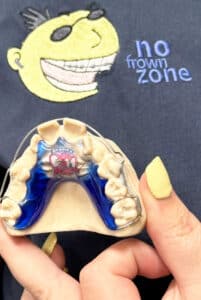
A plate is made using either an impression or – ideally – a 3D scan. An orthodontic lab can then make a model of your teeth. Using this model, the orthodontist will design your plate, and the lab will be able to make the plate. You may be able to personalise the plate by picking the colour of the plastic – and in some cases, adding a picture.
At Fine Orthodontist Sydney we use 3D scanners rather than impressions to obtain a model of your mouth. Our scanners are wand-shaped, designed to capture images from all angles inside your mouth comfortably. They are similar in size to an electric toothbrush. The scanning process is much more pleasant than the alternative of messy, cold impression material.
Can I have a plate to wear at night instead of braces?
Many patients request a plate instead of braces to fix an orthodontic problem. While teeth are being moved, patients usually need to wear their plate day and night. Once the correction has been made, the plate can usually be worn at night only to hold the correction.
A plate is usually designed to correct the alignment of specific teeth. We have less control than with fixed braces, which have more adjustable parts. Plates are most commonly used in children, where there is a compelling reason to intervene early (when there is still a mixture of milk and adult teeth).
Otherwise, if there is no great benefit to early intervention, correction can be done later in one course of treatment (e.g. braces or clear aligners). The most common reasons for early intervention include:
-
To move accident-prone teeth into a better position (where teeth are ‘sticking out’)
-
To help avoid excessive tooth wear and trauma (e.g. correction of an ‘edge-to-edge’ bite, where incisal edges are hitting each other)
-
Where the child is very self-conscious about the appearance of their teeth
-
To hold space for developing adult teeth, and/or tip teeth out the way that may be blocking other teeth from erupting
An alternative to both plates and braces is another type of removable appliance – clear aligners. Whilst they do need to be worn day and night, they are completely clear and removable.
What is the difference between aligners like Invisalign® and a plate?
Rather than being a single appliance adjusted at each visit, aligners are a series of ‘aligners’ or ‘trays’. Each tray is slightly different to the next, placing pressure on the teeth. Just like a plate, the aligners are completely removable. Each aligner in the series will slowly move your teeth closer to the intended result. Generally aligner treatment will require some small ‘attachments’ to be placed on a number of your teeth, which can usually be clear or tooth-coloured. Attachments help the aligners to grip better, and make more precise movements where required.
This is all possible with computer technology: aligners are the result of virtual treatment planning. This allows your orthodontist to plan and design treatments via a computer simulation. This treatment plan is then translated into a series of aligners unique to you and your particular orthodontic problem. Unlike a plate, all the teeth can be moved at the same time with very precise movements.
Orthodontic plates still have their place, but braces or aligners are often more appropriate where greater control or a lot of movement is needed.
As any treatment needs to be specific to your needs book an assessment today.
*If orthodontic X-rays are required, a fee of $180 applies. See Terms and Conditions. Treatment may not be suitable for you.
These Products are not available for purchase by the general public. They are however available to Fine Orthodontist Sydney patients. Always read the label and follow the instructions for use.
Learn more:
-
Examine before and after pictures of orthodontic treatments.
-
Explore the range of orthodontic appliances offered by Fine Orthodontist Sydney.
-
Investigate common orthodontic issues.
- What is orthodontics? Learn more by reading our blog post.