A limited number of FREE Assessments* are still available for January
A limited number of FREE Assessments* are still available for February
A limited number of FREE Assessments* are still available for March
A limited number of FREE Assessments* are still available for April
A limited number of FREE Assessments* are still available for May
A limited number of FREE Assessments* are still available for June
A limited number of FREE Assessments* are still available for July
A limited number of FREE Assessments* are still available for August
A limited number of FREE Assessments* are still available for September
A limited number of FREE Assessments* are still available for October
A limited number of FREE Assessments* are still available for November
A limited number of FREE Assessments* are still available for December
Our customised orthodontic appliances are made as needed to suit your needs.
Orthodontic appliances such as expanders and bite jumpers are often used in children’s interceptive treatment. Learn more about the benefits of starting orthodontic treatment at the right time here:
The Fine Orthodontist Sydney team has the experience, technology, and commitment to ensure your child’s treatment is of the highest standard possible.
Learn what makes us different, and how we’ll make sure that your child’s orthodontic care ticks all boxes:
To ensure you and your family receive the best possible orthodontic care, we used only the best suppliers and the most up-to-date equipment and techniques. We have a world-class facility at Bondi Junction where we make many of our own customised orthodontic appliances, rather than sending them to an outside lab.
Getting a new orthodontic appliance can be very exciting – but possibly also a little daunting for you and your child.
We find that our youngest guests usually respond very well to our relaxed atmosphere. We’ll ensure that you and your child have plenty of opportunities to engage, ask questions, and get up close with sample orthodontic appliances.
Our clinic is equipped with the latest technology to ensure your child’s treatment is as comfortable and accurate as possible.
We offer 3D tooth scanning and printing (so there is no need for plaster moulds and large mouth trays, which many of us remember from childhood!)
Our modern techniques also help to ensure the highest level of accuracy. This helps ensure that your child’s orthodontic appliance will fit correctly and comfortably while delivering results in the shortest time possible.
This page focuses on ‘other’ treatments, such as rapid palatal expansion and bite jumpers.
Our customised orthodontic appliances are commonly used before, along with, or instead of more comprehensive treatment options like sequential clear aligners or braces.
Orthodontic appliances generally target specific bite, jaw or alignment issues.
We’ll consider an orthodontic appliance in cases where one or more of the following goals can be achieved:
Here are some of the orthodontic appliances most commonly used to ensure that growing children get the best possible outcome:
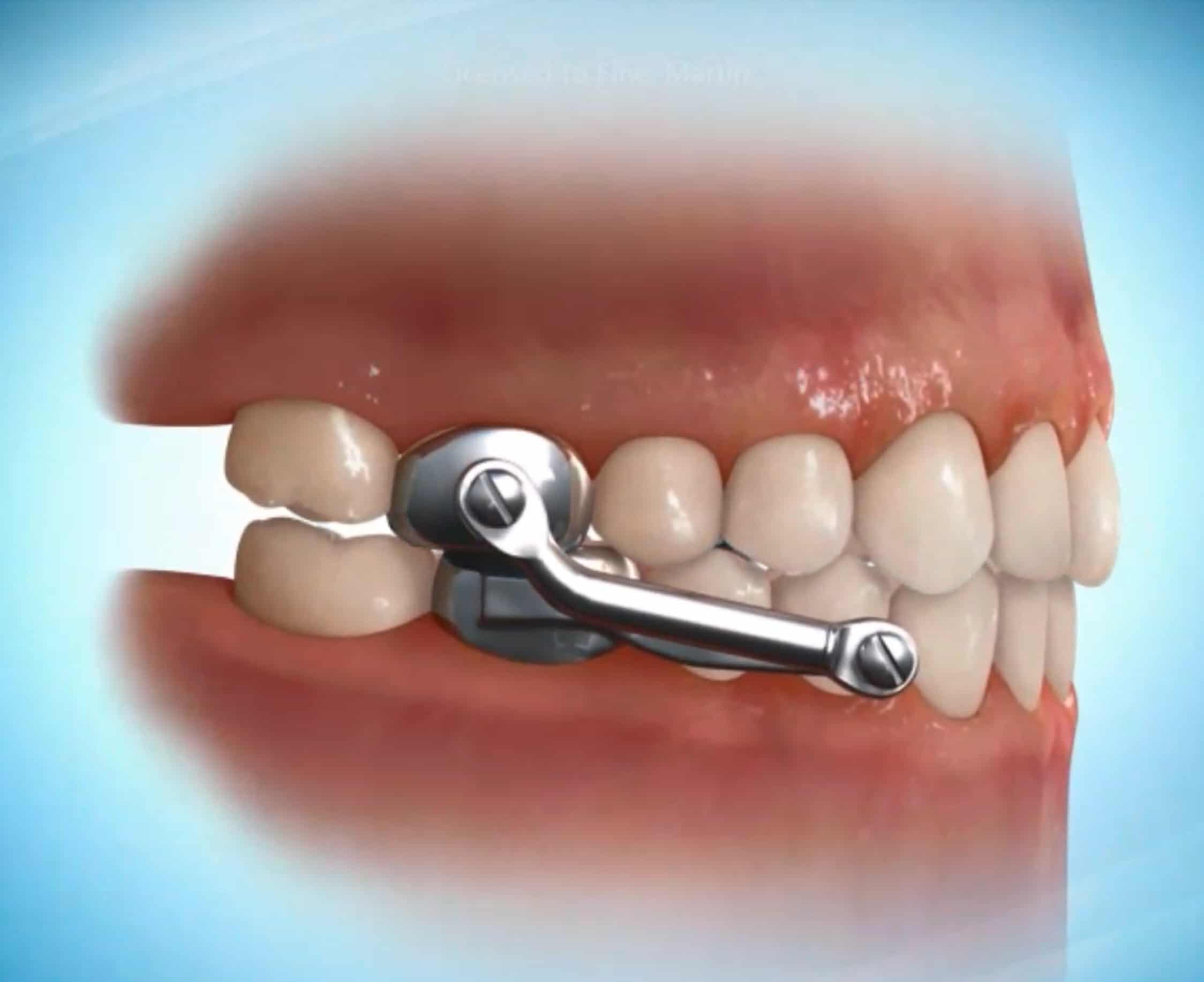
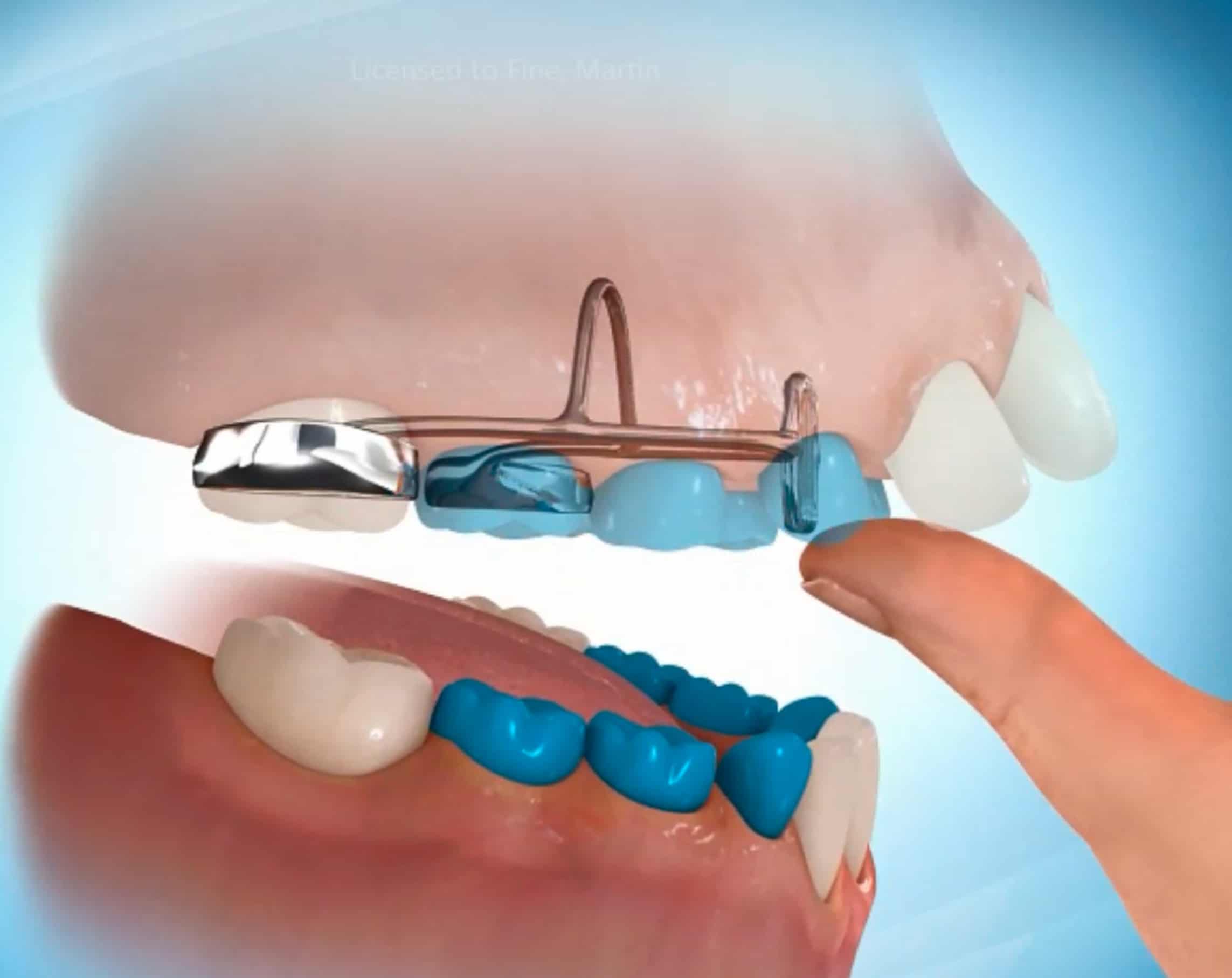
A Herbst Appliance (also known as a Cantilever Bite Jumper or CBJ ) is a highly efficient functional appliance capable of substantial bite corrections.
You may like to check out this before and after page which includes some Herbst appliance before and after photos.
CBJs are commonly used to address the bite issue known as a ‘Class II bite’.
This bite problem is known as a ‘horizontal overbite’ and is often (although not always!) seen in combination with a recessive lower jaw, and upper teeth that stick out, also known as ‘buck teeth’.
By bringing the upper and lower teeth and jaws into better alignment with each other, a CBJ can improve overall facial harmony and balance.
The Cantilever Bite Jumper can make substantial movements. It is not intended to make minor movements on a single-tooth scale.
For this reason, we may recommend that your child have braces or clear aligners later to correct any other issues (including crowding and spacing) and to fine-tune the ‘large-scale’ bite correction provided by the Cantilever Bite Jumper appliance.
A CBJ can be used during periods of rapid growth to help ensure that your child gets the best possible outcome, providing both functional and aesthetic benefits.
Unlike bulky removable plates designed to achieve similar outcomes, Herbst appliances are a discreet option. Your child’s lips and cheeks cover most of the Herbst Appliance.
See our happy patient wearing his new Herbst appliance below, with his smile still shining through!
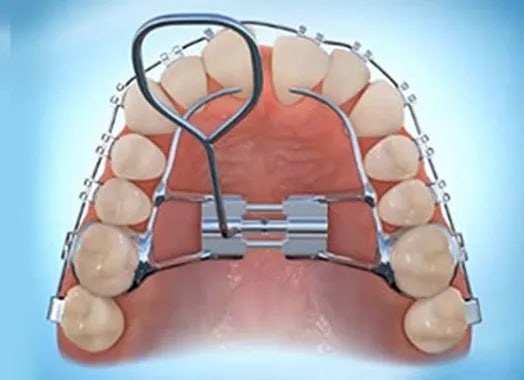
An Expander (also known as a Rapid Maxillary Expander) is most commonly used to address transverse (or ‘sideways’) bite problems.
One common example is a crossbite, where the upper teeth bite inside the lower teeth.
The primary role of an expander is to gently and gradually widen your child’s upper jaw to ensure that it aligns correctly with the lower one.
Expansion in growing children can pave the way for a broader, often more symmetrical smile. It can also ensure that the crossbite is corrected in a stable manner that reduces tooth wear over the long term.
We’ll monitor your child following their jaw expansion. Braces or aligners may still be indicated later in order to address tooth alignment issues.
Jaw expansion is generally easiest in childhood when the upper jaw bones are still in two separate pieces. However, the upper jaw naturally begins to fuse around adolescence, meaning that true upper jaw expansion can only be considered at a later stage with surgical assistance.
Do you have more questions? Dr. Fine’s detailed, informative blog post on orthodontic expanders provides specialist orthodontist insights.
Orthodontic plates can be active or passive. Passive retainers are most commonly used to maintain your final orthodontic outcome.
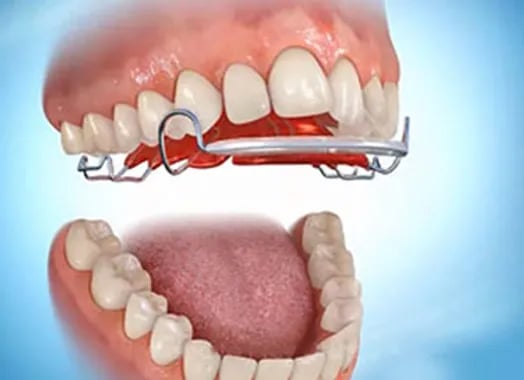
Active plates, on the other hand, are removable orthodontic appliances designed to put pressure on certain teeth to make changes to tooth alignment.
Orthodontic plates are usually made of coloured acrylic and metal wire, clasps, or springs. They are most commonly used to move a limited number of teeth.
An orthodontic plate may be a treatment option if your child has accident-prone, or protruding front teeth (also known as ‘buck teeth’).
They may also be considered where a growing child has a traumatic bite, such as a ‘reverse’ or ‘edge-to-edge’ bite where the front teeth are knocking each other. In such cases, an orthodontic plate can help move your child’s teeth into a safer position.
An orthodontic plate may be a treatment option if your child has accident-prone, or protruding front teeth (also known as ‘buck teeth’).
They may also be considered where a growing child has a traumatic bite, such as a ‘reverse’ or ‘edge-to-edge’ bite where the front teeth are knocking each other. In such cases, an orthodontic plate can help move your child’s teeth into a more aesthetically pleasing, safer position.
We’ll monitor your child following their orthodontic plate treatment. Further treatment may be required once all the permanent dentition is in place.
Your child’s plate will be made by hand in our on-site lab. In most cases, your child can personalise their plate by choosing their favourite colour or adding sparkles, a small picture, or shiny stars to the acrylic portion of their plate.
You may like to check out our blog, which explores Orthodontic Plates in more depth.
In some cases, a short ‘early’ clear aligner course can be considered as an alternative to orthodontic plate treatment. Further treatment may still be required once all the permanent dentition is in place.
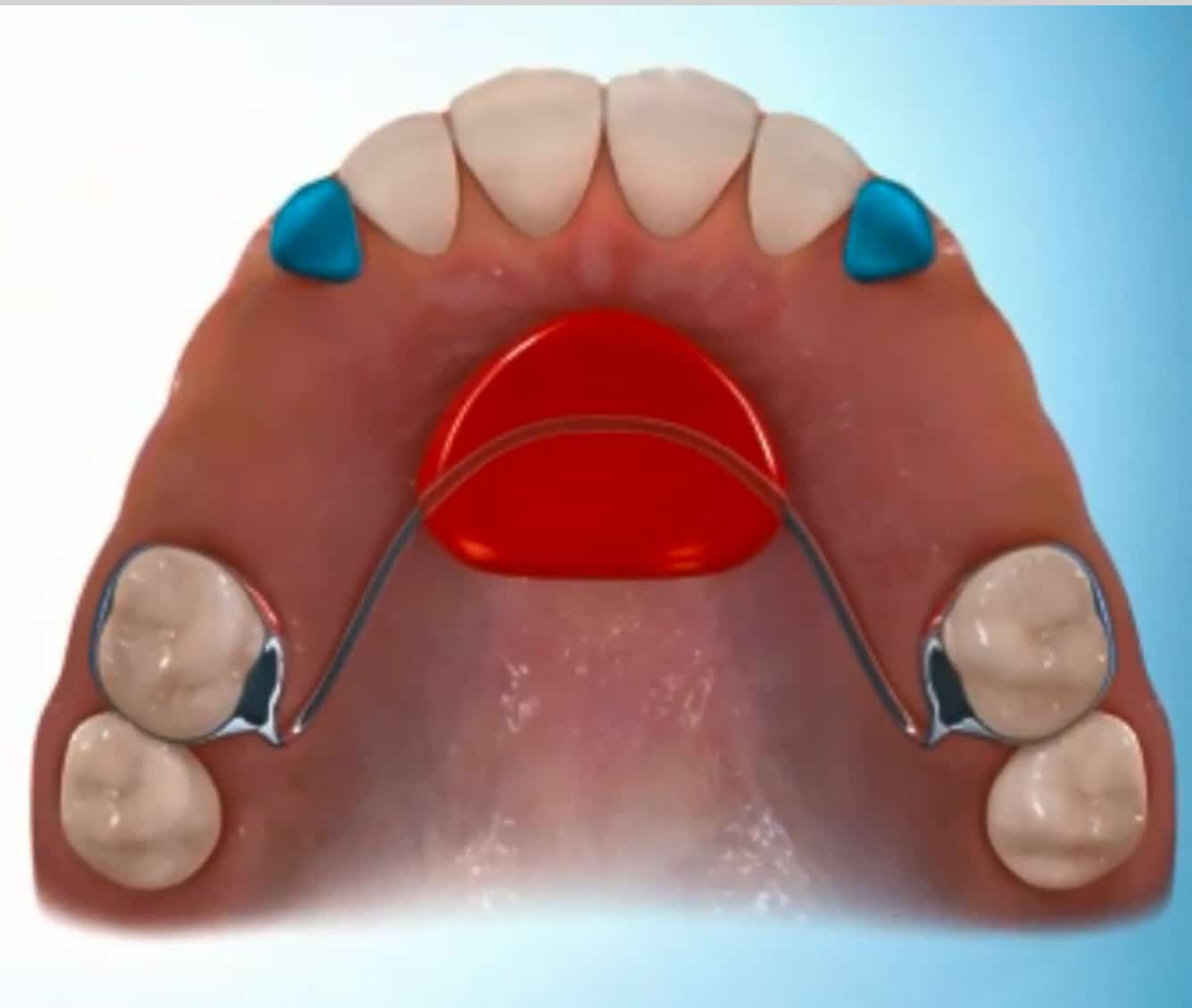
An orthodontic ‘holding arch’ is a fixed orthodontic appliance most commonly used to maintain space in the mouth for permanent teeth that have yet to emerge. This treatment may be recommended to prevent or facilitate crowding correction, and to ensure a more stable final result.
Holding arches are usually positioned behind the teeth so they won’t look obvious to anyone except your dentist or orthodontist.
In some cases, timely placement of a holding arch can alleviate the need for permanent tooth extractions at a later stage.
In some cases, simply ‘holding space’ during key developmental stages can make a significant difference to your child’s overall outcome. Holding arches can make overall treatment faster and easier, ensuring your child‘s bite and smile reach their full potential.
We’ll monitor your child following their holding arch treatment. Further treatment may be required once all the permanent dentition is in place.
Holding arches are usually made from metal wire and held in place with back molar bands.
An upper holding arch is also known as a ‘Nance’, named after the first orthodontist to describe it, while a lower holding arch is known as a ‘lingual arch’.
A Nance usually also includes an acrylic ‘cushion’ where it comes in contact with the upper palate.
Orthodontic habit appliances are custom-designed to help correct or prevent certain oral habits that can affect your child’s dental development, such as thumb-sucking, finger-sucking or tongue-thrusting.
Your child’s appliance will usually consist of a thin metal wire positioned behind the upper front teeth. This orthodontic appliance works by making the habit less comfortable or appealing, and also serves as a reminder for the child to avoid the habit.
If needed, Dr Fine may recommend a habit appliance to ensure that your child’s teeth and jaw develop properly.
Separators aren’t really an appliance in their own right, but are commonly used in the orthodontic office in order to prepare teeth for many other types of orthodontic appliances.
Many types of fixed orthodontic appliances are held in place by metal molar bands (e.g. bite jumpers, expanders, holding arches and habit appliances).
Molar bands fit around your back teeth like a ring around a finger. Your orthodontist will apply special tooth glue to your molar bands. This will help ensure your orthodontic appliance stays in place throughout your treatment.
Separators are temporary rubber rings used to prepare teeth for banding.
Including a separator stage makes fitting your new orthodontic appliance much easier, as separators have already gently nudged apart your back molars. Once the separators have done their work, your new appliance can easily slide onto your back teeth.
Your separators will be stretched and then gently squeezed into place, a process similar to tooth flossing. Over the next few days, tooth movement will occur as the teeth respond to the presence of the separators.
Have you ever had a piece of apple skin caught between back molars? This is how most people describe the initial feeling of orthodontic separators!
There may be some discomfort or achiness as your teeth respond, however this is generally described as mild.
Retainers are a special category of orthodontic appliances because they are ‘passive’ rather than ‘active’. They are designed to hold rather than move your teeth.
Everything in life requires maintenance. Your smile is no different! Retainers are essential to maintaining your beautiful smile after your active orthodontic treatment is completed. They come in a variety of forms, but at Fine Orthodontist Sydney, they usually look similar to either a clear aligner, or an orthodontic plate.
Retainers are ‘passive’ orthodontic appliances designed to hold teeth in place.
Your retainer fitting appointment is a great time to reflect on your transformation, browse your before-and-after photos, and celebrate your results!
Learn more in our blog dedicated to braces aftercare.
Wear duration depends on the issue being addressed and the type of appliance used. Most orthodontic appliances are worn from around 4 months to 2 years, depending on what they are designed to achieve. Retainers are a little different; as they are maintaining your results, long-term ongoing wear is recommended.
While most orthodontic appliances allow for regular eating habits, some dietary adjustments may be needed. It’s advisable to avoid hard, sticky, or crunchy foods that can damage the appliance. Removable appliances are generally removed for eating unless your orthodontist has advised otherwise.
Proper oral hygiene is crucial. Brushing twice a day and regular flossing is advised. Specialised brushes or floss can assist in cleaning around fixed appliances.
Initially, patients might experience mild discomfort or soreness. However, this sensation typically subsides within a few days as the mouth adapts, and any pain can usually be managed with over-the-counter pain relievers. The application of ‘orthodontic wax’ may also be considered if parts of the appliance can be felt resting against the inside of lips and cheeks.
The appliances themselves don’t cause cavities, but improper oral hygiene during treatment can. It’s essential to maintain diligent cleaning to prevent food accumulation and plaque build-up.
Initial discomfort, slight speech alterations, or irritation to the inside of cheeks and lips can occur, but these issues usually improve quickly.
Yes, you can. However, for contact sports, it’s recommended to wear a custom-made mouthguard to protect both the appliance and your teeth from potential injury.
Some appliances, especially those in the palate region, might cause an alteration in speech. As you adapt to the appliance, speech usually improves. Practicing reading out loud at home is highly recommended to help with the adjustment.
Regular visits, typically every 6-10 weeks, are crucial for adjustments and progress monitoring. However, the exact frequency is highly dependent on the treatment type and individual needs.
While many patients seek orthodontic treatments for cosmetic reasons, these treatments often have health benefits as well. Properly aligned teeth are easier to clean, and are less prone to excessive wear and trauma.
Take the first step towards a lifetime of beautiful smiles!
® The products on this website are not available for purchase by the general public. They are however available to Fine Orthodontist Sydney patients. Always follow the directions for use.
* If orthodontic X-rays are required, a fee of $180 applies. See Terms and Conditions.
Call us… We’ll make you smile!