
An orthodontic expander, also known as palate expander, is a device used to widen the upper jaw. They are commonly recommended for patients with a crossbite, where the upper teeth bite inside the lower teeth instead of overlapping them correctly.
Orthodontic expanders are typically used (when indicated) in children and adolescents, they can also play a role in adult treatment.
What is an Orthodontic Expander?
Orthodontic expanders work by applying gentle pressure to the upper jaw, encouraging the two halves of the palatal bone to widen over time.
The active phase of expansion, where the device is actively widening the jaw, usually lasts about a month. However, to ensure the changes remain stable, the palate expander stays in place for an additional six months.
What Does an Orthodontic Expander Look Like?
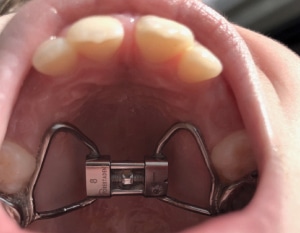
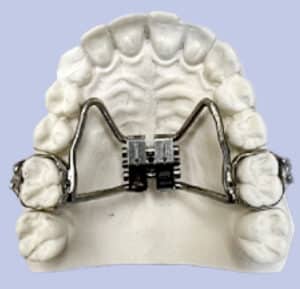
A palate expander is a custom-made orthodontic appliance that fits in the roof of the mouth and attaches to the upper back teeth for stability. It consists of two halves connected by a small central screw, which sits high in the middle of the palate.
For fixed expanders, this screw is turned daily with a special palate expander key, following a specific schedule. Each turn applies gentle outward pressure, encouraging the two halves of the jawbone to widen gradually over time.
There are fixed and removable types of orthodontic expanders, but fixed expanders are the more commonly recommended for predictable and reliable results.
How Are Palate Expanders Made?
Each palate expander is custom-made to fit comfortably in your mouth. To create yours, your orthodontist will take either a digital scan or a traditional impression of your upper jaw and teeth. If your orthodontist uses digital technology, this means no messy impressions, just a quick and easy scan!
Once your scan or impression is complete, it’s sent to a dental lab, where the expander is carefully designed to match your unique anatomy. At Fine Orthodontist Sydney, we use digital scans for a more comfortable experience, and our onsite Bondi Junction lab allows us to create precisely tailored expanders, ensuring a great fit and efficient treatment.
When is an Orthodontic Expander Needed?
Palate expanders are most commonly recommended (when indicated) for children, but some teens and adults may benefit from them too. The ideal age for treatment is usually between 8 and 12 years old, while the upper jaw is still developing.
An Expander may be recommended when the upper jaw is too narrow, preventing the teeth from fitting together properly, like a lid that doesn’t quite fit on a box. In some cases, the jaw may even shift to one side so the child can bite more comfortably. This is known as a functional shift.
How Will I Know If My Child or I Would Benefit from a Palate Expander?
If you or your child has a narrow upper jaw, a dentist may recommend seeing an orthodontist for a more detailed assessment. While dentists can identify certain bite concerns, some jaw development issues may only be recognised by a specialist orthodontist.
To make the most of treatment opportunities, it’s a good idea to bring your child for an orthodontic assessment around age 8. This ensures that any potential concerns, such as a crossbite, crowding, or narrow palate, can be assessed, and treatment considered, before options become more limited.
For adults, treatment may be more complex, more on that below.
Why Use a Palate Expander?
If indicated, palate expanders can offer both functional and aesthetic benefits, particularly when used at the right stage of development.
Key Benefits of a Palate Expander
- Supports symmetrical jaw growth – Helps guide proper development, reducing asymmetries and issues like chin deviation.
- Reduces the need for future surgery – Expanding the upper jaw during childhood can prevent the need for jaw surgery later in life.
- Improves bite function – Corrects a range of upper-lower jaw discrepancies, making chewing and speaking more comfortable.
- Enhances smile aesthetics – A broader upper jaw results in a wider, brighter smile without dark spaces at the sides.[spacer height=”20px”]
What If I Don’t Get a Palate Expander?
Orthodontic treatment is almost always optional. Seeing an orthodontist for an assessment is the best way to find out the pros and cons that apply in your (or your child’s) specific case.
In some cases, braces alone can compensate for a narrow upper jaw by expanding the dental arch, this approach is less stable and may push teeth to the edges of the supporting bone, potentially affecting overall oral health in the long term.
If a jaw size discrepancy is left untreated, it can lead to:
- Bite problems that worsen over time
- Increased risk of asymmetries.
How to Turn Your Expander
Step-by-Step Guide to Adjusting Your Expander:
- Locate the adjustment hole – Your expander screw has a series of tiny holes that appear one at a time as the screw is turned.
- Insert the key – You’ll be given a special key (which looks like a small metal rod attached to a handle). Insert it into the visible hole in the screw.
- Ensure the key is fully engaged – After inserting it, let go briefly. If it stays in place, it’s correctly positioned.
- Turn the key gently towards the back of the mouth – This rotation moves the expander, causing the next hole to appear.
- Confirm the turn is complete – If the next hole doesn’t appear, the turn wasn’t fully completed.
- Track your progress – Mark each completed turn on your chart to ensure you’re following your orthodontist’s instructions.
- Store the key safely – Choose a designated spot so it doesn’t get lost.
- Make turns part of your daily routine – A set time, such as last thing at night after brushing your teeth, can help you stay consistent
By following these steps, you’ll help ensure your palate expander works effectively and comfortably. If you have any trouble adjusting it, don’t hesitate to contact your orthodontist for guidance.
👉 Watch our “How to Turn Your Expander” video! 🎥🦷
Getting Used to Your Palate Expander
Like any new orthodontic appliance, a palate expander takes some time to adjust to. During the first few days, you may experience minor discomfort. This is normal and should improve as you get used to the expander.
Is a Palate Expander Painful?
Most people feel mild pressure or tenderness for a few days after getting their expander fitted or after turning the key. Mild over-the-counter pain relievers can be considered to help ease any discomfort. However, a palate expander should not cause severe pain. If you experience significant discomfort, contact your orthodontist for advice.
Common Temporary Side Effects
As your mouth adapts to the expander, you may notice some short-term effects, including:
- Extra saliva – Your mouth will produce more saliva than usual at first, but this will return to normal within a few days.
- Speech difficulties – You may have a slight lisp or feel like your speech is different. With practice, this usually improves within a week.
- Food getting stuck – Just like braces, expanders can trap food and plaque. Thorough daily cleaning will help prevent this.
- Gap between front teeth – As the jaw expands, a small space may appear between the upper front teeth. This is normal and usually settles before treatment is finished.
- Mild discomfort – Some irritation to the cheeks, tongue, or roof of the mouth is common. You may also experience pressure, an ache or mild tingling behind the nose when expansion is underway.
Tips for a Smoother Adjustment
- Eat soft foods – Start with soft, easy-to-chew foods. Good examples include scrambled eggs, mince, and mashed potato. Avoid hard, sticky, or chewy foods and lollies.
- Be patient with speech changes – Reading aloud can help your tongue adjust more quickly.
- Keep the expander clean – Brush and floss around the expander carefully and rinse with water to remove food debris.
- Follow your turning schedule – Turning the key as instructed will help ensure smooth progress without unnecessary discomfort.
Most people adapt to their new palate expander within a week or two. Any discomfort should fade as your mouth gets used to the appliance. If anything feels unusual or painful beyond the normal adjustment period, reach out to your orthodontist for guidance.
FAQs About Palate Expanders
What is a Rapid Maxillary Expander (RME)?
A Rapid Maxillary Expander (RME) is just another name for the standard fixed palate expander used in orthodontics.
The “rapid” part of the name refers to how quickly the expansion happens—typically at a rate of 0.25 mm per day, with the active phase lasting about a month. After this, the expander remains in place for several months to allow new bone to form and stabilize the change.
Maxilla is the anatomical name for upper jaw.
So, if your orthodontist mentions a Rapid Maxillary Expander, they’re just using the more technical term.
Can I Have a Removable Palate Expander?
In some cases, a removable orthodontic plate made from metal and acrylic may be used. However, these are typically recommended when only tooth movement is needed, rather than skeletal expansion. If true jaw expansion is required, a fixed palate expander is usually the best option.
Can Adults Get a Palate Expander?
Palate expanders do not work as well for adults as they do for children or teenagers. This is because the upper jaw bones begin to fuse and calcify as a child grows into early adulthood. Once these junctions are fully developed, the upper jaw can no longer be expanded using traditional orthodontic methods.
For the best long-term results, an orthodontic assessment by age 8 is recommended to determine if early intervention, such as expansion, is needed.
For adults , treatment options may include a surgically assisted maxillary expansion (SAME), where expansion is combined with jaw surgery to achieve the necessary skeletal change.
f you’re considering jaw surgery, Dr Fine will refer you to a qualified surgeon for a consultation. Dr Fine and your jaw surgeon will work together closely to develop a treatment plan designed to achieve your goals.
It is important to note that all types of surgery have potential risks, even when carried out by an appropriately qualified surgeon.
👉 Book your free* assessment! 🦷📅*
Can You Widen the Lower Jaw with an Expander?
Generally, no. Unlike the upper jaw, the lower jaw is a single bone and does not have a midline suture that can be expanded. While braces or aligners can adjust the position of the lower teeth, they cannot widen the actual bone structure of the lower jaw using only an expander appliance.
My Child Has Crowded Teeth—Do They Need an Expander?
It depends on the individual case. At Fine Orthodontist Sydney, we assess each patient carefully before recommending a palate expander. In most cases, if the upper and lower jaws already fit well together, there’s no significant advantage to using an expander.
Instead, crowding can often be managed by expanding both arches with either braces or clear aligners. Because of this, a two-phase treatment with an expander is not usually necessary unless there is a specific jaw size discrepancy that requires correction.
If you’re unsure, an orthodontic consultation will help determine the best approach for your child’s needs.
Will a Palate Expander Help my Child with Breathing or Obstructive Sleep Apnea (OSA)?
While a palate expander may improve airflow in some cases, OSA is a multifactorial condition, and expansion alone is not a proven treatment for it. Research suggests that OSA is primarily linked to neuromuscular tone, obesity, soft tissue obstruction (such as large tonsils or adenoids), and other factors, not simply the width of the dental arches or nasal cavity.
Based on current evidence, using a palate expander solely for airway reasons in patients without a clear maxillary width deficiency or crossbite does not appear to be justified.
Orthodontists play an important role referring patients for medical evaluation, but treating airway issues falls outside the scope of orthodontics. If OSA is suspected, a consultation with a sleep specialist or ENT is the best course of action.
How Much Do Palate Expanders Cost?
The cost of a palate expander typically varies, though it can be higher depending on individual treatment needs. A good estimate is around $3,000-$4,000. This includes the appliance and all associated appointments. However the price can vary from that and on several factors, including:
- Type of Expander – Different expanders have different price points.
- Complexity of Treatment – Whether or not the expander is part of a comprehensive orthodontic plan, such as braces or clear aligners.
- Location – The cost of treatment can vary significantly depending on your region or city.
For an exact quote, it’s best to schedule an assessment with a specialist orthodontist, who can assess your specific needs and provide a personalised cost estimate.
Schedule a free* assessment with Fine Orthodontist Sydney here: Book online today!