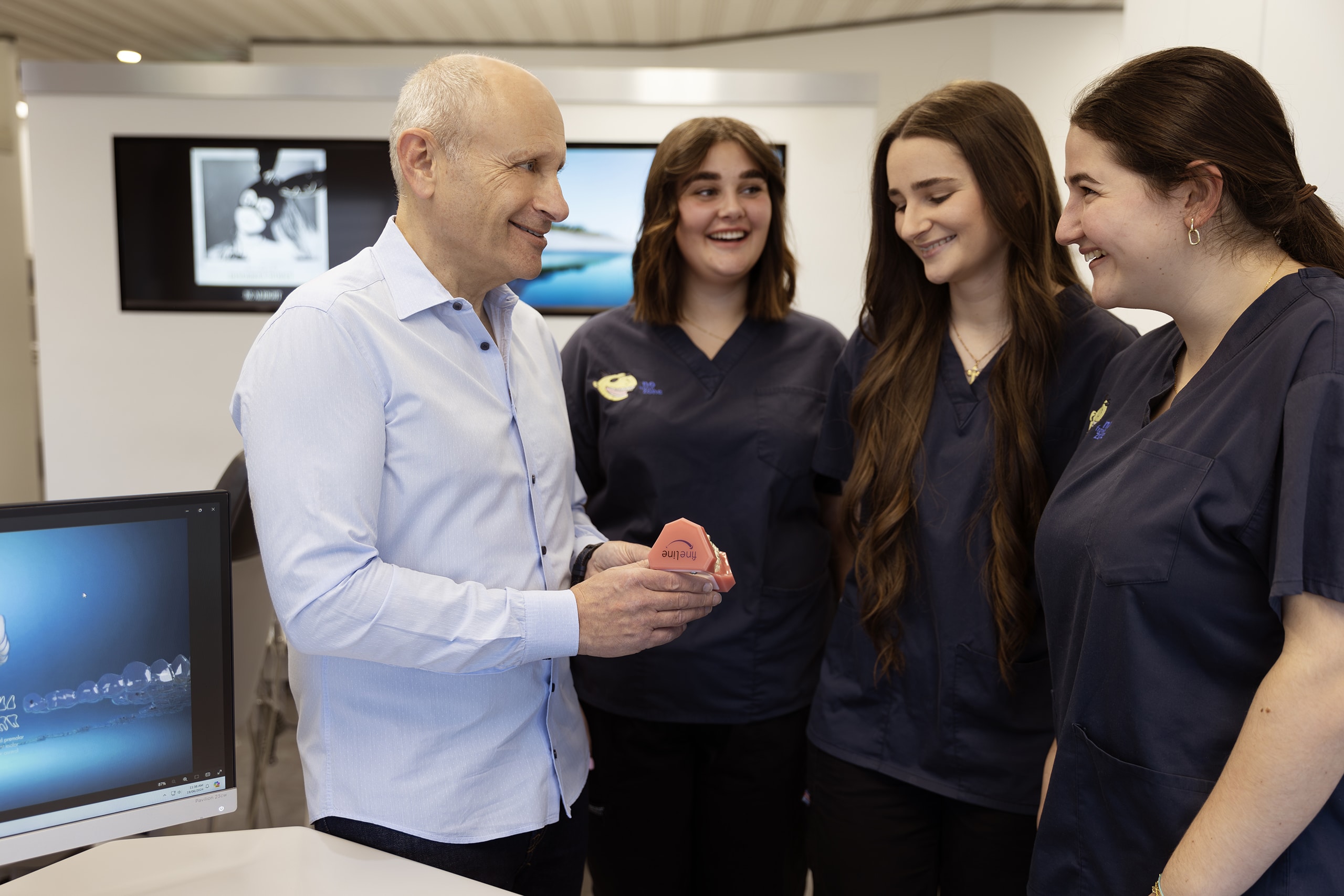
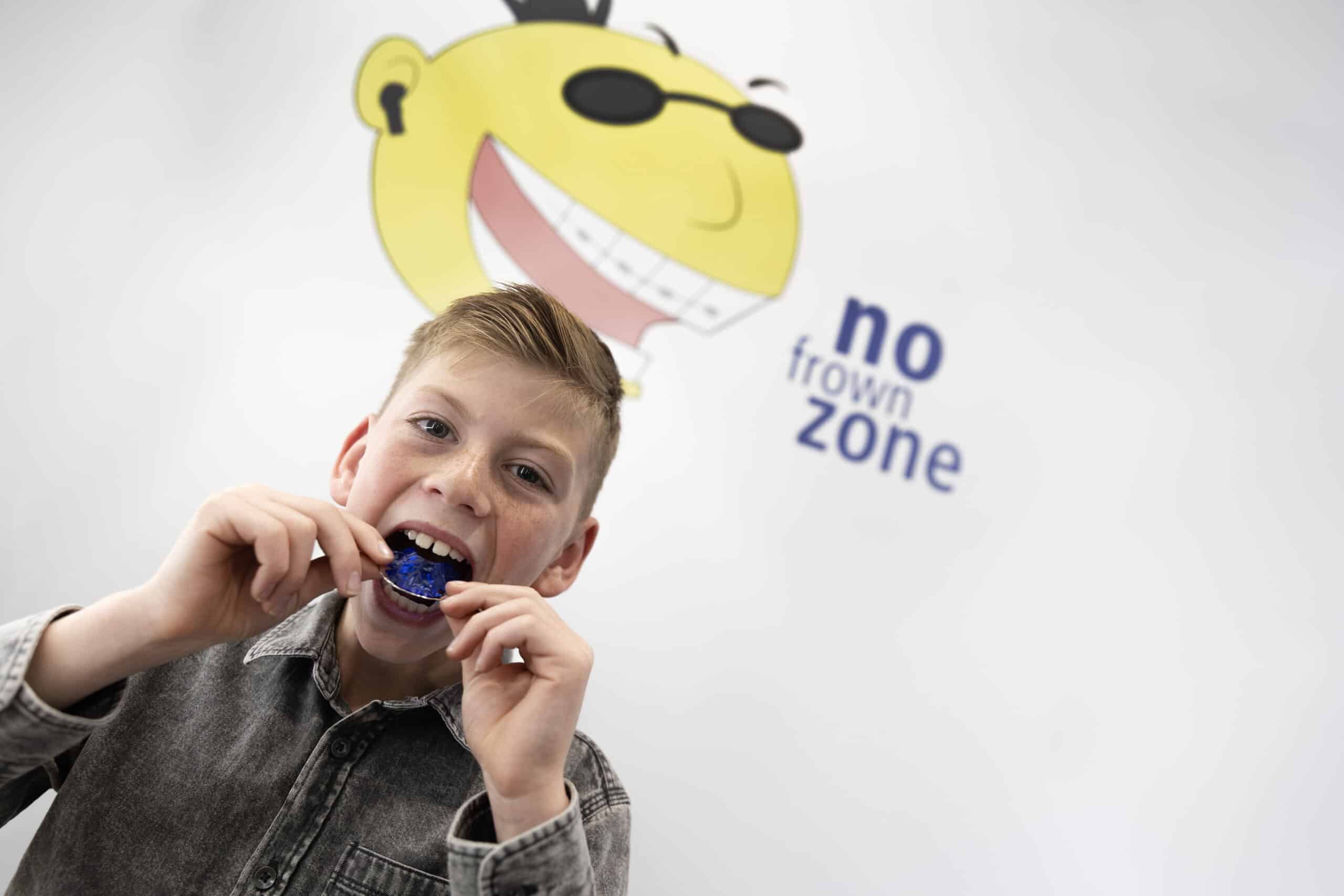
Image above: Child putting in an orthodontic plate
Orthodontic Problems and the Benefits of Early Prevention
Orthodontic issues such as too much space between the teeth, over-crowding, jaw growth issues, and incorrect bites can all be inherited, or result from an injury to the mouth. Thumb-sucking and early or late loss of baby teeth also contribute to orthodontic issues.
Children mostly lose all their baby teeth by around age 13. Early orthodontic treatment can be advantageous because it takes place during a time when the teeth are ‘changing over’ and jaw bones are still developing. This developmental stage allows orthodontists to more effectively influence jaw alignment and address spacing or crowding issues. As individuals transition into adulthood, the jaw bones gradually mature, which can make corrective procedures more challenging and sometimes less effective. Therefore, addressing orthodontic concerns early on can lead to more efficient treatment and potentially better long-term results.
Receiving early preventative orthodontics as a child can help make the overall treatment process easier.
Where indicated, preventative orthodontics may allow:
-
Jaw growth and development to be monitored.
-
Permanent teeth to be guided into their correct position, often avoiding crowding or spacing problems.
-
Front teeth to be protected from the risk of trauma.
-
Improved oral hygiene habits.
-
Reduction in the time and complexity of second phase, or adult, treatment.
How to Tell If a Child Needs Preventative Orthodontic Treatment
Here are some signs your child could potentially benefit from early treatment:
-
Difficulty biting or chewing.
-
Speech problems.
-
Mouth breathing.
-
Late or early loss of baby teeth.
-
Persistent thumb-sucking habits that continue past around age 5.
-
Teeth that fail to come together.
-
Protruding teeth.
-
The jaw shifts when your child opens or closes their mouth.
-
Crowded front teeth.
What to Expect During Early Treatment – Initial Assessment
Clinical Examination
The exam generally includes photographs and an examination and assessment of the growing face, teeth and jaws.
Digital X-Rays
Digital x-rays may be recommended to help inform your child’s exam. X-rays are useful for picking up certain issues that otherwise may be missed (e.g. teeth trapped under the gums).
Discussion
If treatment is indicated at this stage, options will be discussed in detail for your consideration. In many cases, no treatment is indicated, however we may recommend your child visit us for regular checkups as they grow and develop.
You can learn more about early intervention here: children’s orthodontics
Note: Regular dentist check ups are still needed
Your regular family dentist will arrange:
- Check ups and overall management as primary dental care giver
-
Scaling and polishing to remove tartar and stains
-
Instructions for you and your family on the best way to reduce plaque and cavity-causing bacteria
-
Fluoride and other general dental treatments as recommended.
To learn more, contact Fine Orthodontist Sydney, or book a Free* Assessment.