
Should you choose Clear Aligners like Invisalign® or veneers for a straighter smile?
You’ve decided you want straight teeth. Maybe you’ve already investigated the array of treatments on the market. But, have you narrowed it down yet? Commonly, as part of their decision-making process, people may wish to compare clear aligners like Invisalign® vs veneers. But how do you know which option is the best for you? Let’s take a closer look.
An Overview of Clear Aligners
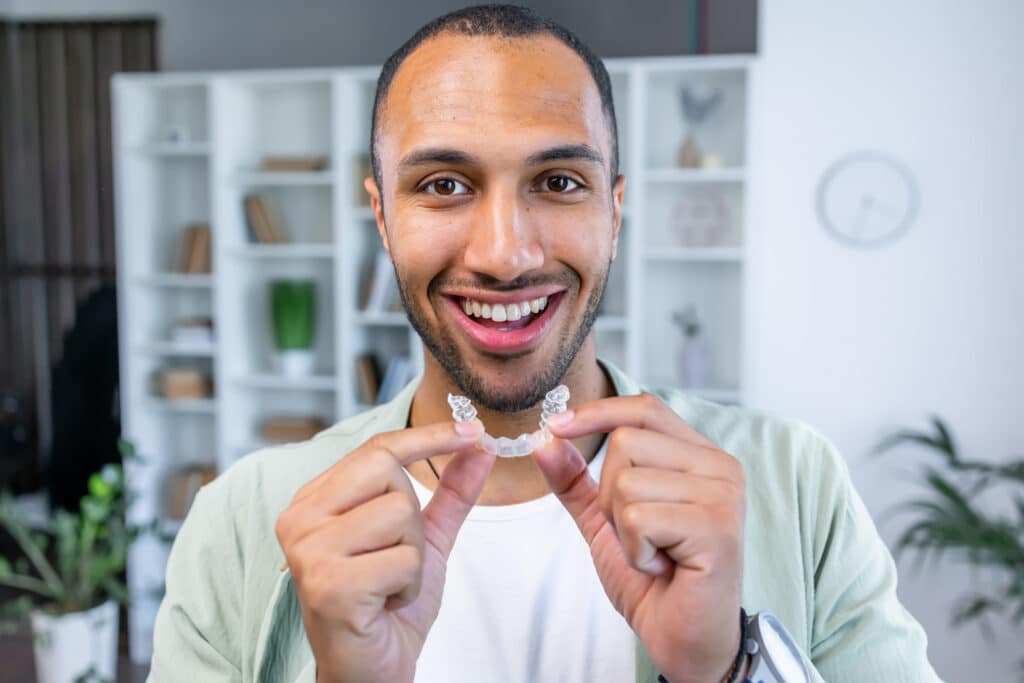
Clear aligner systems like Invisalign® (just one of many suppliers of clear aligners) make use of clear trays to straighten your teeth and realign your smile. This option means you can achieve a stunning smile without having to wear traditional metal braces. The aligners aren’t just less obvious than their metal counterparts, aligners can actually be more effective than braces at dealing with certain types of orthodontic problems.
What’s more, they are more comfortable and make cleaning your teeth after every meal a whole lot easier than metal braces.
An Overview of Porcelain Veneers
Veneers can also be a good way to improve the appearance of your smile, with obvious differences compared to clear aligners. Rather than slowly rearranging and realigning the teeth as aligners like Invisalign® do, Porcelain Veneers are bonded to existing teeth. Your clinician will apply a thin layer of porcelain to your existing tooth enamel to improve the colour, shape and overall look of each tooth.
Veneers can help improve tooth shape, and are useful for chipped, damaged or discoloured teeth. They can also help close the appearance of any gaps.
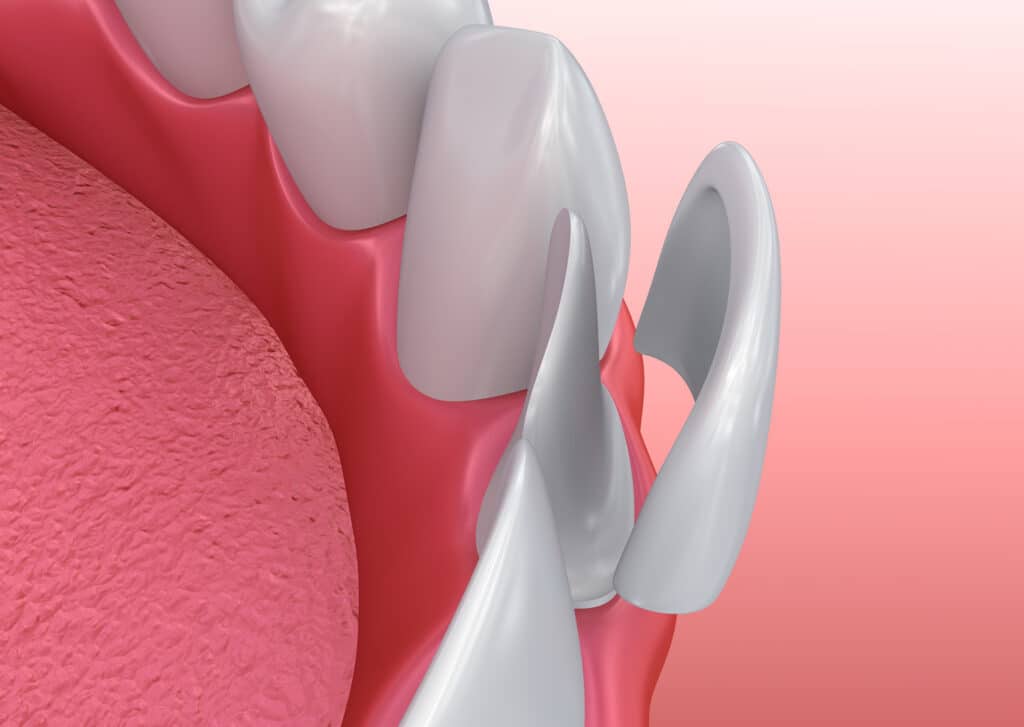
Unlike aligners, veneers often involve re-shaping or reducing the natural tooth underneath.
As a specialist orthodontist practice, we don’t offer veneers, however we can refer you to an alternative dental professional who can help if this is an option you’d like to explore. You would need to see them for an assessment, and to gain an understanding of your individual suitability, and all that is involved (including risks specific to the procedure).
Aligners like Invisalign® vs Veneers: Which Is Better for You?
Aligners involves straightening your existing teeth, veneers involve a porcelain layer placed on individual teeth. Depending on your dental needs and the problems you seek to address, one option will likely heavily outweigh the other.
In some cases both aligners and veneers are a good option. If you want to change the alignment of your teeth AND you want to change the appearance and/or shape you may want to consider Invisalign® followed by veneers. Keep in mind though, that veneers do require maintenance & may need to be re-applied after a decade or so. That’s not to say tooth-straightening is also maintenance free! To keep your teeth straight after orthodontics, we recommend long-term commitment to retainer wear.
Come on in and Meet us!
Of course, the easiest way to make an informed decision is to discuss aligners vs veneers with your dentist and orthodontist.
To learn more about your orthodontic treatment options (if indicated), book a free* assessment at Fine Orthodontist Sydney.
*If orthodontic X-rays are required, a fee of $180 applies. Treatment may not be suitable for you.
These Products are not available for purchase by the general public. They are however available to Fine Orthodontist patients. Always follow the instructions for use.
Find out more about Invisalign®:
-
Learn more about Invisalign aligner treatment.
-
Learn more about the differences between Invisalign vs braces.
-
Learn about the pricing for Invisalign treatment.