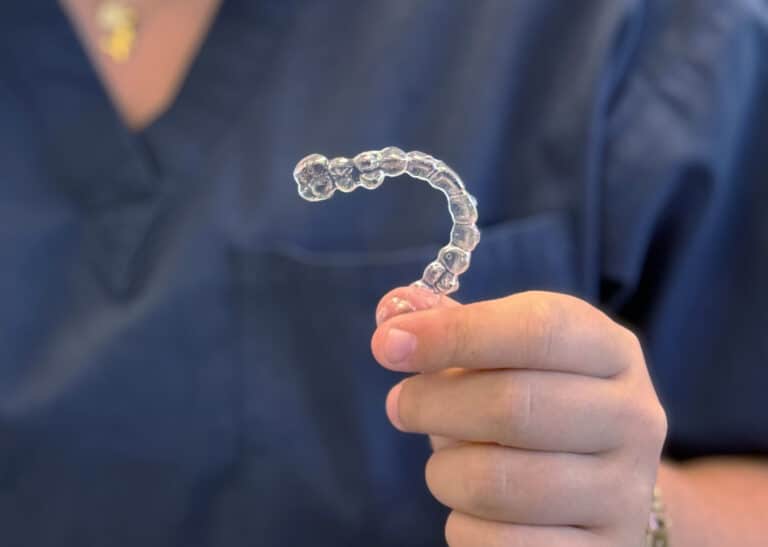
Clear aligners including Invisalign® have become a popular alternative to metal braces. A skilled orthodontist can achieve excellent results, sometimes in under 12 months – all with other people barely noticing the trays. However, there can be a few mild side effects with Invisalign® (which are also applicable to other similar clear aligner systems). Below, we look at some of the common issues some patients experience.
Common Side Effects with Clear Aligners
1. Discomfort
While the trays are smooth and follow the contours of your teeth there is a possibility the aligners could irritate lips, gums and tongue as patients get used to them. This is usually no more than a general awareness that something is different and usually resolves within days. Patients may also be aware of the ‘attachments’. Attachments are small, clear bumps which allow the aligner trays to better grip and move teeth. Attachments can cause localised discomfort against the inside of lips and cheeks and there is a chance of developing an ulcer. Again, this is more likely towards the beginning of treatment when the mouth is adjusting to the new aligners. Keep in mind that attachments are much smaller, flatter and smoother than traditional braces brackets, bands and wires.
2. Speech
Since a thin layer of plastic covers the teeth, patients may notice a lisp during speech for the first few days. This doesn’t always happen but is one of the common mild side effects with clear aligners like Invisalign®. The best way to alleviate this issue is to leave the aligners in as much as possible and practice speaking – so that your tongue gets used to working around the aligners. Speech patterns should begin to automatically adjust and compensate for the aligners. During an important phone call, meeting or presentation, it is OK to take the aligners out. Just make sure to place them straight back in to avoid any delays in treatment time.
3. Allergies
It’s rare, but possible to have an allergic reaction to the trays. If you believe you’re at high risk for allergies, or this does occur to you, discuss this with your Invisalign provider. You may be entitled to a full refund or transfer to another treatment type should this happen.
4. Bad breath
The tooth trays don’t allow saliva to wash over your mouth in the same way it usually would. So, some patients experience a dry mouth and bad breath. We recommend drinking water throughout the day, as well as brushing teeth twice a day. Flossing should also be carried out regularly. Make sure the aligners are kept clean as well – a dirty aligner or unclean teeth can be another cause of bad breath. You can read more about oral hygiene during aligner treatment here.
5. Biting
Some patients can find that they bite the inside of their cheek as treatment progresses. This can occur as patients become used to a new bite and haven’t yet made adjustments for the new teeth positions. Like the other side effects with aligners like Invisalign®, this should improve with time.
The Upside of Aligners
1. Invisible
The trays are very discreet – almost invisible. Clear aligners like Invisalign® allow you to smile and laugh freely without feeling self-conscious about the appearance of your teeth.
2. Removable
You can take the trays out to eat, drink, play sport and swim – they should stay in for a minimum of 22 hours per day though.
3. Efficient
Most patients’ treatment is complete in as little as 12 months, with some mild cases completed in as little as 6 months. Your orthodontist will be able to advise an approximate treatment time during your first consultation. Most patients will notice that aligners like Invisalign® will start to work in just six weeks.
4. Convenient
Clear aligners requires less follow up appointments when compared to the traditional metal braces, and shorter appointment times. This is especially the case when patients utilise our dental monitoring app to help us monitor their treatment and progress remotely.
Is Invisalign® the Right Choice for You?
If you want to correct misaligned or crooked teeth without fixed braces, Invisalign® could be a suitable choice for you to develop a straighter smile. It is, however not the only option. The best way to determine your options is a consultation with a specialist orthodontist who can analyse your unique needs and offer treatment options relevant to you.
Book a free* assessment and find out more about Invisalign® and other applicable treatment options at Fine Orthodontist Sydney.
*If orthodontic X-rays are required, a fee of $180 applies. Treatment may not be suitable for you.
These Products are not available for purchase by the general public. They are however available to Fine Orthodontist Sydney patients. Always read the label and follow the instructions for use.
Find out more about Invisalign®:
-
Learn more about Invisalign aligner treatment.
-
Learn more about the differences between Invisalign vs braces.
-
Learn about the pricing for Invisalign treatment.